
Corpus Christi sits right on the water, and that immediate proximity to the Gulf means salt air is not an occasional visitor here, it is a daily constant. Whether your daily drive takes you along Ocean Drive, near the marina, or simply through neighborhoods a few miles inland, the same salt laden Gulf breeze reaches nearly every vehicle in the city. Combined with the area’s persistent humidity, this creates a genuinely demanding environment for two specific systems that tend to suffer more here than almost anywhere else in Texas, your vehicle’s undercarriage and its electrical connections.
Why Corpus Christi’s Coastal Position Makes This Worse
Unlike cities set back from the coast, Corpus Christi’s location directly on Corpus Christi Bay means salt spray and airborne salt particles reach vehicles with very little buffer. Prevailing Gulf winds carry this salt content across the entire metro area consistently, not just in neighborhoods immediately along the water, which means even drivers who live and work several miles inland still deal with meaningfully elevated salt exposure compared to most other Texas cities.
Add in the area’s high humidity, particularly during the long, warm season that stretches through much of the year here, and you get a combination where salt settles on a vehicle’s surfaces and then stays damp far longer than it would in a drier climate. This extended moisture contact is exactly what accelerates the corrosion process, giving salt more time to do its damage before a vehicle has any real chance to dry out.
Why The Undercarriage Takes The Brunt Of It
Your vehicle’s undercarriage sits closest to the road and collects the most direct exposure to salt laden moisture, while also being the area least likely to get noticed during a routine glance at the car. Frame rails, brake lines, exhaust components, and suspension parts are all vulnerable, since sustained dampness combined with constant salt exposure accelerates rust formation considerably faster here than it would in a less coastal environment.
Brake lines deserve particular attention, since these are often steel components carrying fluid under pressure, and corrosion that develops over time can eventually weaken them to the point of failure rather than just causing a cosmetic issue. Vehicles that regularly encounter standing water during Corpus Christi’s occasional heavy rain events or storm surge related flooding face an even more accelerated version of this undercarriage exposure, since standing salt water is considerably more aggressive than salt air alone.
Why Electrical Connections Are The Second Major Vulnerability
Beyond the undercarriage, electrical connectors throughout the vehicle face their own version of this coastal challenge. Salt laden humid air finds its way into connectors, junction boxes, and small gaps in wiring harnesses, promoting corrosion on metal contacts designed for a clean, uninterrupted electrical signal. Ground connections, often located on the body or frame, are frequently among the first affected, and corrosion here can cause a surprisingly wide range of seemingly unrelated electrical symptoms throughout the vehicle.
Battery terminals face a similar risk, since the combination of battery gases and Corpus Christi’s salty, humid air accelerates corrosion buildup faster than most drivers expect. Sensor connectors in the engine bay, where heat and moisture both concentrate, are especially vulnerable as well, sometimes causing a check engine light to appear intermittently before clearing itself once the connection dries out temporarily, only to return during the next humid stretch.
If you have dealt with a car that struggles to start, particularly if the issue seems to come and go depending on recent weather, our guide on the top 10 reasons your car won’t start and how to get back on the road covers a range of causes, several of which trace back to the kind of corrosion issues common along the Gulf Coast.
Why Routine Inspections Matter More Here Than Inland
Because both undercarriage rust and electrical corrosion tend to develop out of sight, routine inspections carry more weight in Corpus Christi than they would for a driver further inland. A technician familiar with Gulf Coast conditions knows to check brake lines, frame components, and accessible electrical connectors more thoroughly than a generic maintenance schedule would suggest, since the combined salt and humidity exposure here genuinely accelerates wear beyond what standard intervals typically anticipate.
Catching early corrosion during a routine inspection usually means a simple, affordable fix, whether that is a protective coating on an undercarriage component or a bit of dielectric grease applied to a vulnerable connector. Waiting until a problem causes an actual failure, like a corroded brake line or a connector that has completely failed, turns a minor maintenance item into a significantly larger repair.
Simple Habits That Help Slow The Damage
Washing your vehicle regularly, including a deliberate rinse of the undercarriage, removes accumulated salt before it has extended time to sit and cause damage. This matters considerably more here than in a drier or less coastal city, since Corpus Christi’s combination of constant salt exposure and humidity accelerates corrosion faster than either factor alone would.
Applying dielectric grease to accessible electrical connectors and battery terminals creates a protective barrier against moisture intrusion, while a rust inhibiting treatment applied to exposed undercarriage components on a regular schedule adds meaningful protection against the specific coastal stresses vehicles face here. Parking under cover when possible, and checking drainage points around doors and rocker panels to make sure they are not clogged, both help reduce the amount of standing moisture your vehicle has to contend with.
Timing your washing routine around hurricane season is also worth considering, since vehicles exposed to storm surge or heavy salt spray during a tropical system face a much more concentrated dose of corrosive exposure than they would during an ordinary humid week. A thorough rinse as soon as it is safe to do so after any significant coastal storm can meaningfully reduce the lingering damage that saltwater exposure would otherwise cause if left to sit on the vehicle for days afterward.
Why A Mobile Mechanic Fits Corpus Christi’s Climate Reality
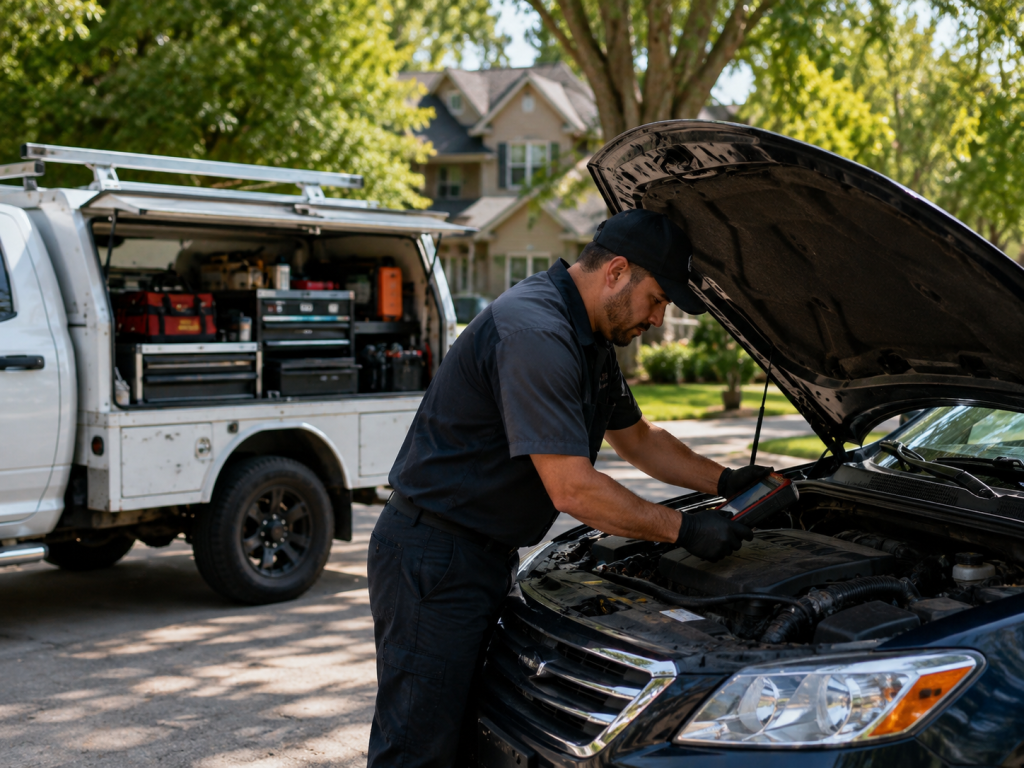
Given how much of this maintenance revolves around inspecting hard to reach undercarriage components and electrical connections, having a technician come directly to your home or workplace anywhere in the Corpus Christi area is often more practical than arranging a separate shop visit. A mobile mechanic can perform a thorough inspection of both systems, applying protective treatments and catching early corrosion before it becomes a larger issue.
We covered the broader benefits of this approach in our article on why mobile mechanics are better than traditional auto shops in Corpus Christi, which explains how convenience and local familiarity with Gulf Coast conditions come together, particularly useful for this kind of ongoing coastal maintenance.
Protect Your Vehicle Before The Gulf Takes Its Toll
Living on the Gulf Coast comes with plenty of advantages, but it also means your vehicle faces a combination of salt and humidity that most inland Texas drivers never have to think about. Catching wear early on both your undercarriage and your electrical connections can add years to the life of components that would otherwise fail well before their time in this environment.
If it has been a while since your vehicle had a thorough inspection, visit our homepage to learn more about our services, or reach out through our contact us page to schedule a visit wherever your vehicle happens to be parked in the Corpus Christi area.
A little proactive care now goes a long way toward keeping your car dependable despite everything the Gulf’s salt air and humidity throw at it throughout the year.